Onboard customers without collecting the data that creates liability
T3 Identity issues privacy-preserving credentials at onboarding, with no PII stored, no data residency exposure, and no breach surface to manage.
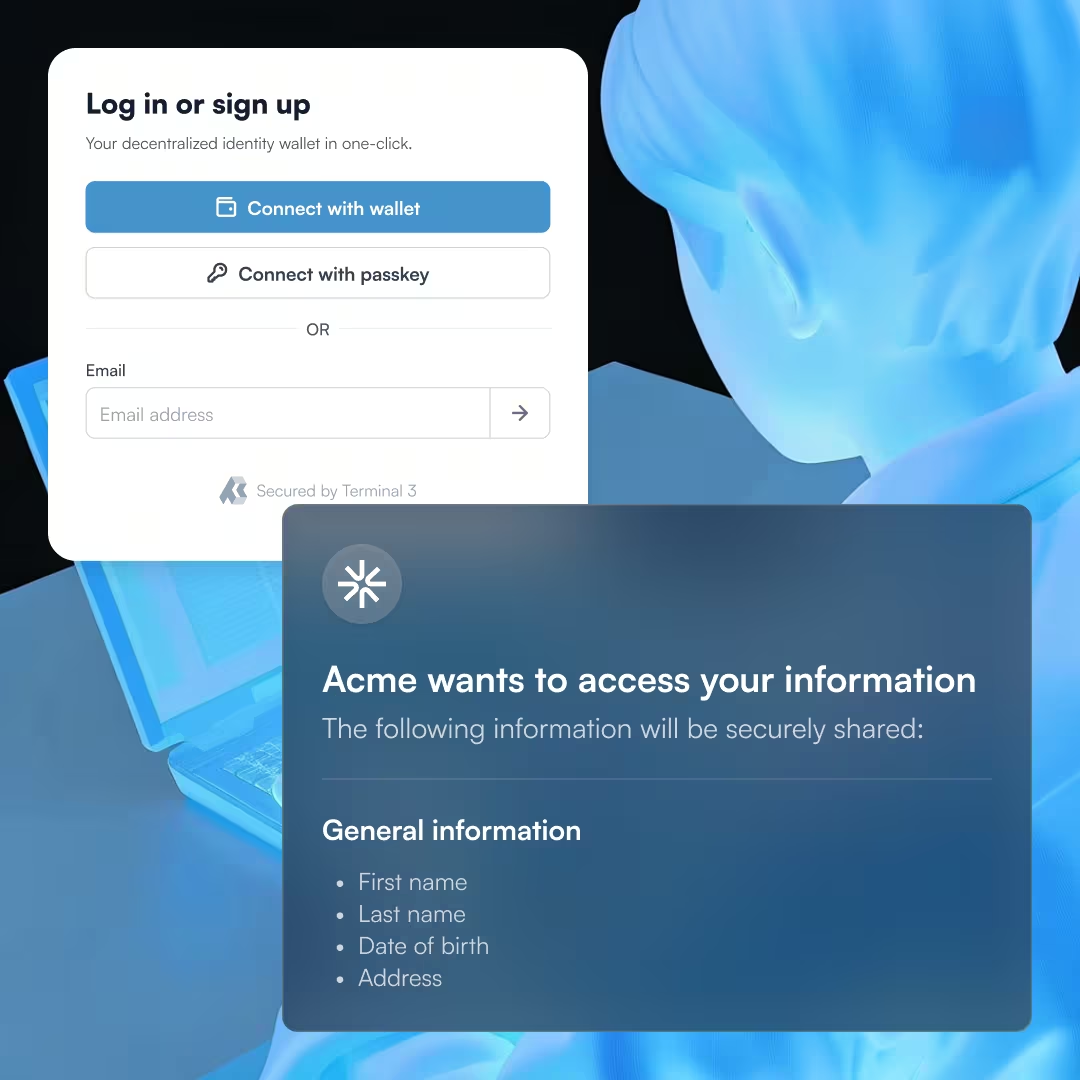
Your compliance program is growing the estate it's supposed to protect
Every new customer relationship adds another record. GDPR, CCPA, and their equivalents attach liability to holding personal data at all, not just to mishandling it.
Holding PII is the risk, not just mishandling it
The prevailing assumption is that data risk is about security practices. But the liability begins the moment data is collected. Every record held is a potential breach, a data subject request, a residency obligation.
Right-to-erasure is expensive when data is everywhere
When a customer requests erasure under GDPR, the response requires finding every copy of their data across every system it touched. Organizations that minimized collection at onboarding have shorter, cheaper, more defensible responses.
Data residency requirements multiply with scale
As organizations expand into new jurisdictions, each new market adds rules about where customer data can be held. Reducing what's collected at onboarding reduces what needs to be localized.
Remove liabilities from your data estate
Zero-PII onboarding: verified without storing
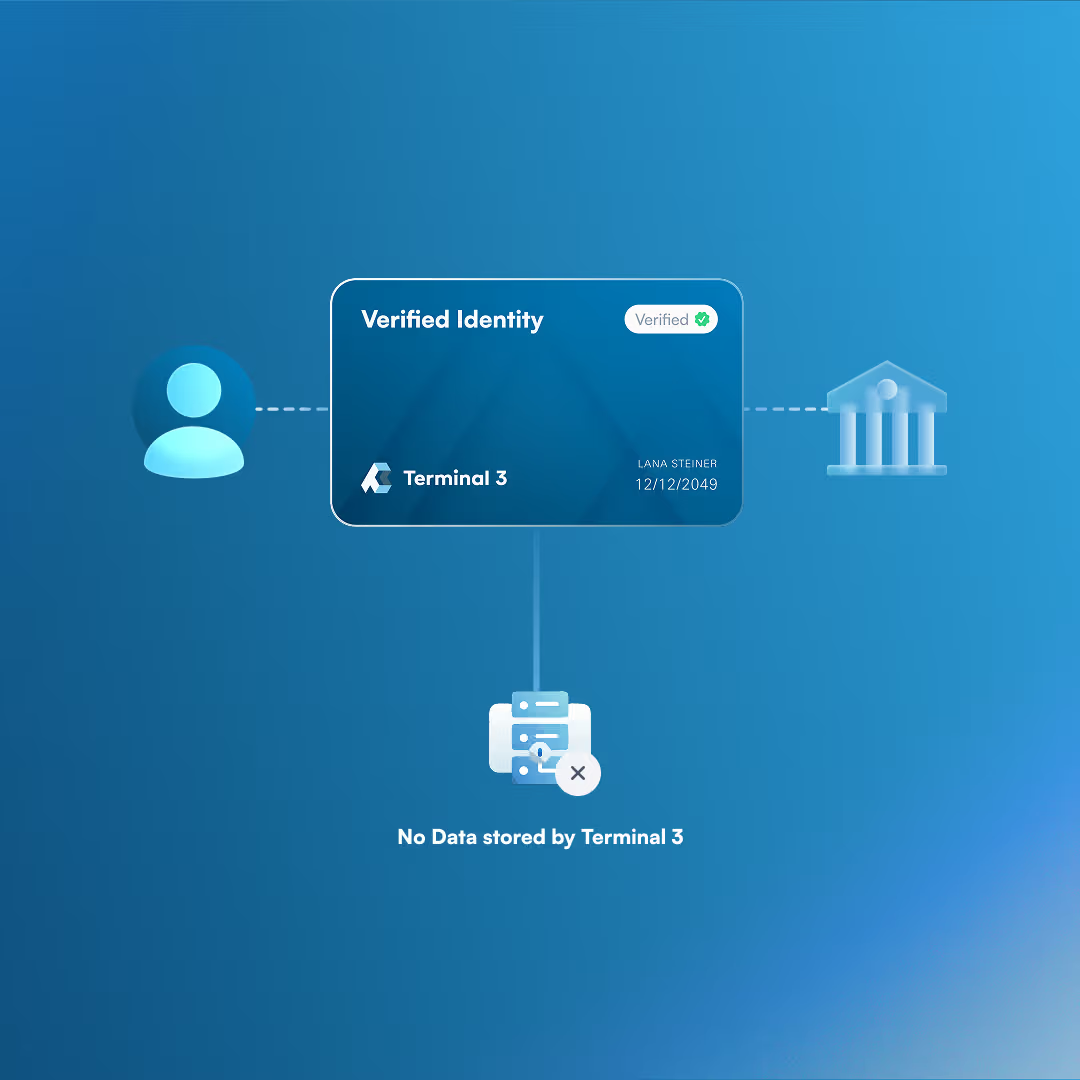
T3 Identity converts identity verification into a credential held by the customer. No PII is retained in T3's infrastructure after issuance. The organization completes the verification; the customer holds the record.
Right-to-erasure without the complexity
When a customer requests erasure, there is no T3-held record to find, scope, and delete. The credential lives with the credential subject. Erasure requests resolve at the architecture level rather than through a data deletion workflow.
No data residency requirements to navigate
T3 holds no customer data, so there is no T3-held PII subject to residency requirements. Cross-border operations that previously required data localization strategies are straightforward because there is nothing to localize.
Minimal breach surface by design
The most effective way to avoid a personal data breach is to not hold the data. T3's zero-storage architecture reduces the PII an organization holds at onboarding to the minimum necessary, in many cases to zero.
The tools that power zero-PII onboarding
T3 Identity handles credential issuance, pseudonymous recognition, and lifecycle management, with no underlying PII retained.
The verification happens, but nothing is stored
T3 Identity converts identity checks into W3C Verifiable Credentials held by the customer. T3 stores no PII after issuance. GDPR data subject rights — access, erasure, portability — resolve at the architecture level because there is no T3-held record to produce.
Zero-data identity infrastructure
GDPR-compliant by architecture
T3 holds no PII. Data subject access requests, right-to-erasure obligations, and data residency requirements resolve at the infrastructure level. There is no T3-held record to produce or delete in response.
W3C Verifiable Credentials
Credentials follow the W3C VC data model. Any accepting system running OpenID for VCs can verify them with no proprietary network membership or bilateral data-sharing agreement required.
Quantum-resistant signing
Credentials are signed using FIPS 204 post-quantum cryptography. Identity credentials remain cryptographically valid against future threats, including attacks targeting compliance records.
Integrate zero-PII credential issuance into your onboarding stack
T3 wraps your existing KYC provider. Issue credentials from checks you already run — your onboarding flow stays unchanged, your PII exposure doesn't.
Built for institutions that operate across regulated jurisdictions
We take security seriously and have implemented robust measures to protect your data.


Stop holding data you don't need and the liability that comes with it
Talk to our team about zero-PII identity infrastructure for your onboarding stack.