Travel Rule compliance without transmitting raw PII to counterparty VASPs
T3 Verify satisfies FATF Travel Rule disclosure requirements through verifiable credential exchange. Originator and beneficiary data is shared as cryptographic proofs rather than data files.
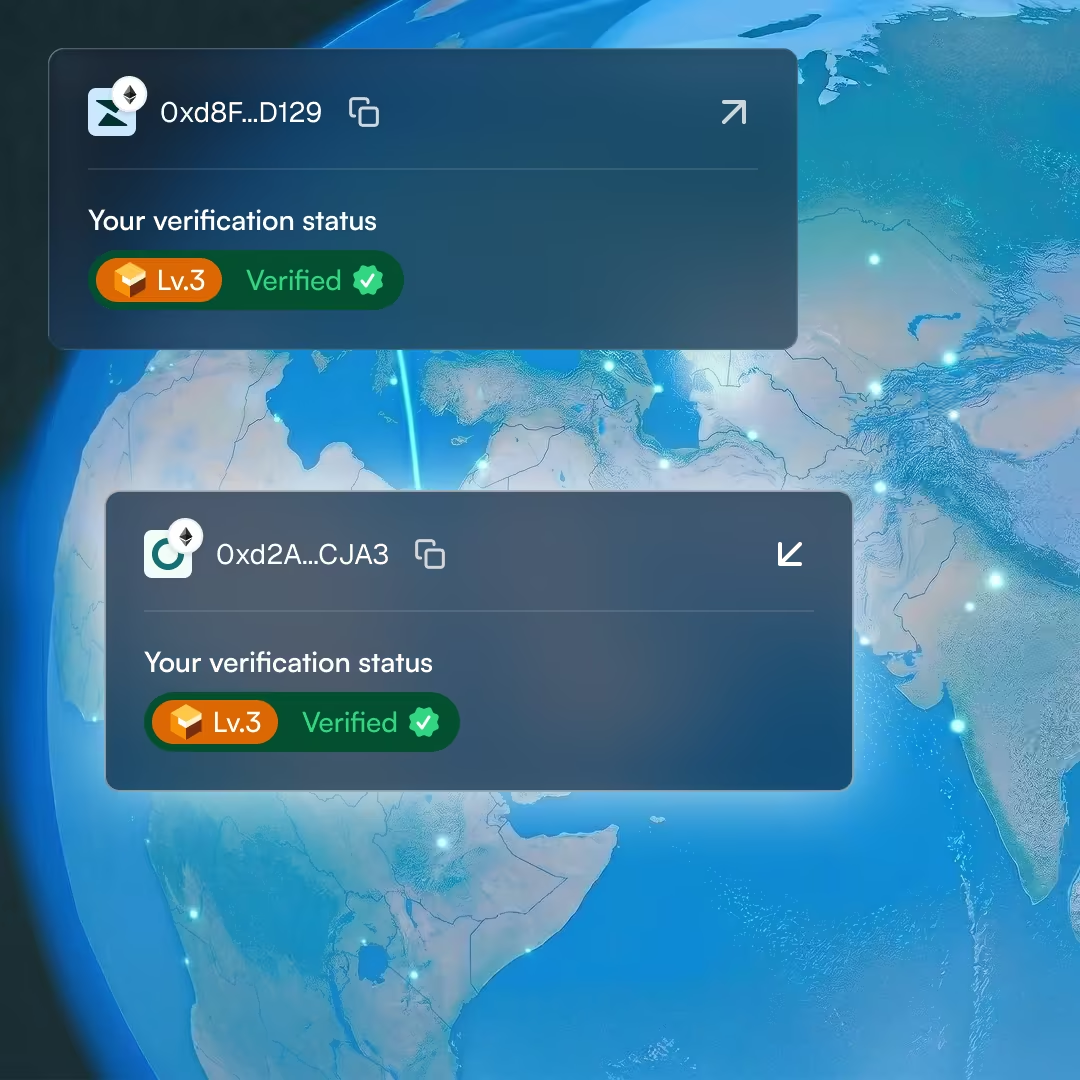
The Travel Rule requires sharing information. Accumulating it creates the problem.
Every qualifying transaction under FATF Travel Rule triggers a data transfer between VASPs. The prevailing approach transmits raw PII — creating a GDPR exposure, a residency issue, and a breach vector at every transfer.
Raw PII transfer creates liability at every VASP in the chain
When originator and beneficiary data is transmitted as a data file, the receiving VASP becomes a holder of that customer's personal information, inheriting all the GDPR, residency, and breach obligations that entails.
No standard protocol: bilateral agreements don't scale
Current Travel Rule compliance relies on bilateral data-sharing agreements, proprietary protocol memberships (TRISA, OpenVASP), or ad-hoc disclosure. None of these scale to the size of the global VASP ecosystem.
Wallet-level KYC doesn't exist at transaction time
Most VASPs run KYC at account onboarding, not at the wallet level. When a transaction triggers Travel Rule requirements, a real-time KYC look-up is needed, adding latency to a system built for speed.
Cross-border compliance without cross-border data
Satisfy Travel Rule without transmitting PII files
T3 credentials carry originator and beneficiary claims as cryptographic proofs. The receiving VASP verifies the proof, confirming identity and compliance status, without receiving a raw data file to store, secure, and manage.
No new GDPR exposure at the point of disclosure
Credential exchange doesn't create a new PII-holding event at the receiving VASP. The proof confirms what the regulation requires; the underlying personal data stays with the issuing institution.
Works across all FATF jurisdictions without bilateral agreements
T3 credentials use W3C Verifiable Credentials and OpenID for VCs. Any VASP can accept them without a bilateral data-sharing agreement, proprietary Travel Rule protocol membership, or custom integration.
Wallet-bound credentials available at transaction time
KYC/AML credentials anchored to wallets at creation are available for Travel Rule presentation the moment a transaction requires them, with no real-time KYC look-up and no latency at the point of transfer.
The tools that power Travel Rule compliance
T3 Verify packages and verifies Travel Rule credentials. T3 Identity anchors KYC to wallets at creation.
Originator and beneficiary data as verifiable proofs
T3 Verify packages originator and beneficiary KYC data as W3C Verifiable Credentials. Receiving VASPs verify the proofs against the issuing VASP's public key, confirming compliance status without receiving the raw personal data.
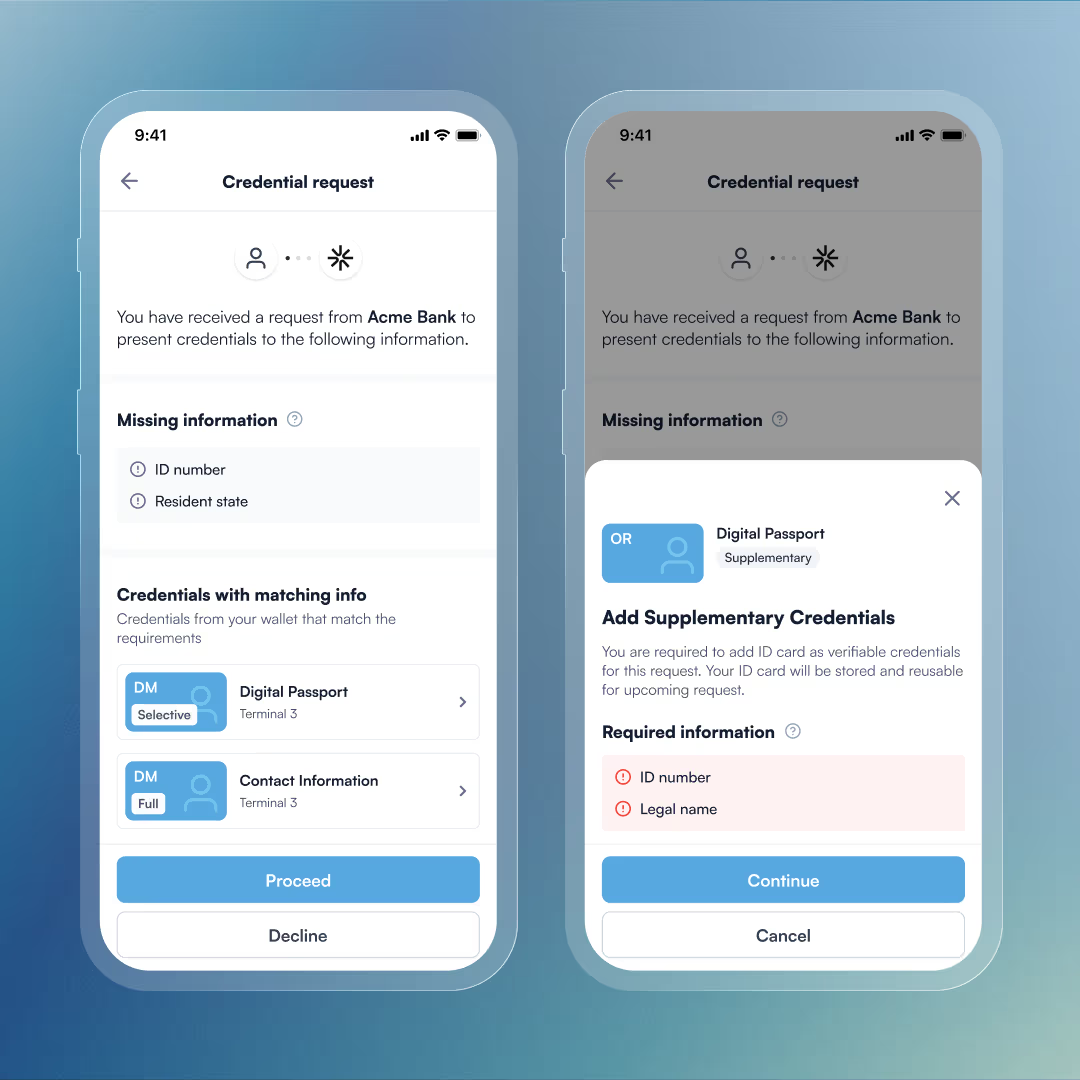
VASP-grade Travel Rule infrastructure
FATF Travel Rule-aligned credential structure
T3 credentials carry the originator and beneficiary fields required by FATF Travel Rule, with IVMS101-compatible claims encoded in the W3C VC data model for portable, verifiable exchange between VASPs.
W3C Verifiable Credentials
Any VASP running OpenID for VCs or a W3C DID-compatible verification layer can accept T3 Travel Rule credentials with no TRISA, OpenVASP, or other proprietary protocol membership required.
Quantum-resistant signing
Travel Rule credentials are signed using FIPS 204 post-quantum cryptography. Compliance records remain cryptographically valid against future threats targeting financial transaction data.
Integrate Travel Rule credential exchange into your VASP infrastructure
T3 wraps your existing transaction monitoring stack. Submit originator and beneficiary data; receive a Travel Rule-compliant credential proof without building bilateral VASP integrations.
Built for institutions that operate across regulated jurisdictions
We take security seriously and have implemented robust measures to protect your data.

Travel Rule compliance — without the PII transfer problem
Talk to our team about verifiable credential-based Travel Rule disclosure for your VASP.