National digital identity that travels with citizens across borders
T3 Verify issues verifiable national ID credentials accepted at borders, airline check-ins, and public service access points, without passport scans or physical document checks.
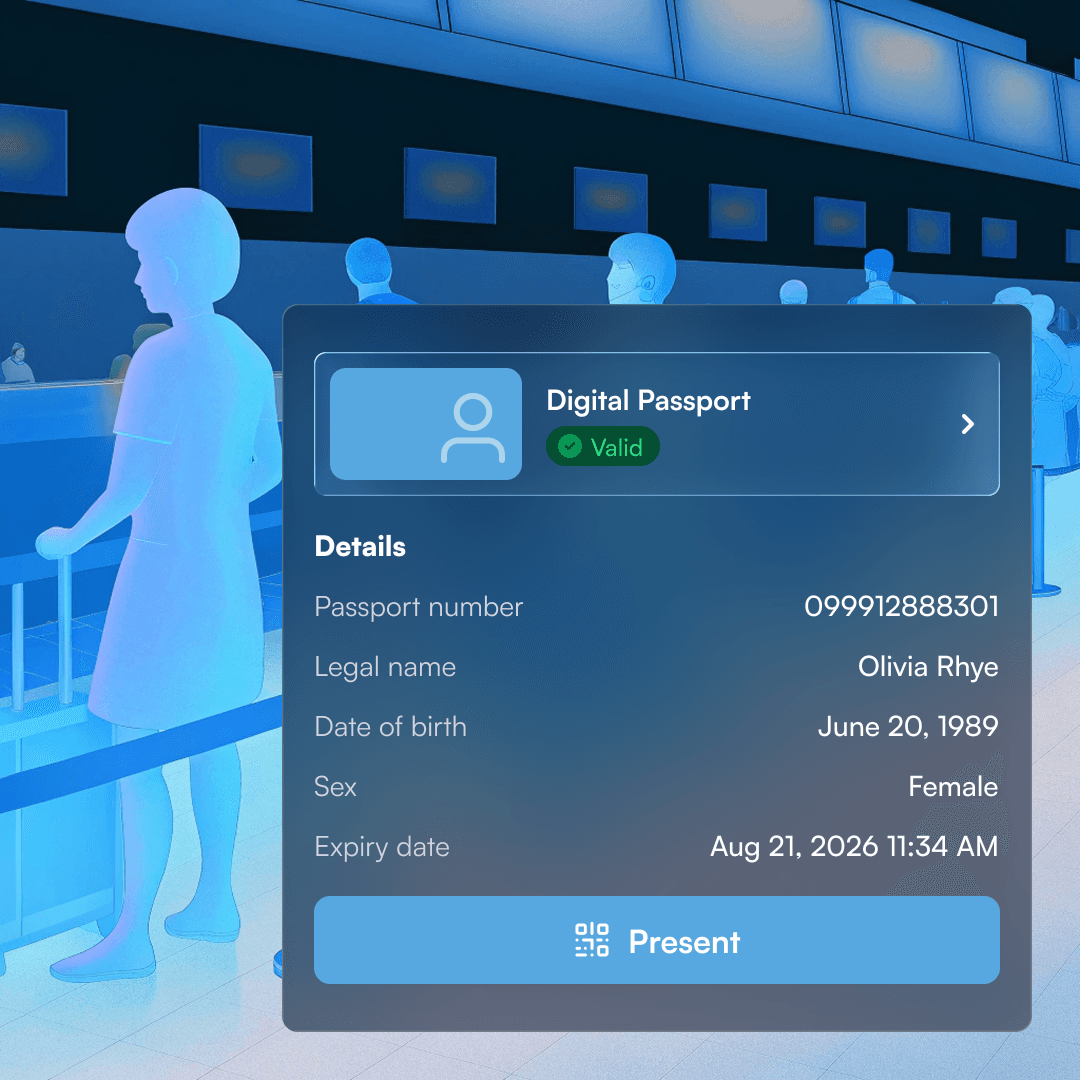
Physical documents don't scale to digital borders
Every checkpoint that scans a passport creates a data collection event. Every database holding copies of those scans is a breach target. The infrastructure was built for a world that no longer exists.
Checkpoints accumulate data they shouldn't hold
A passport scan at an airline gate or border checkpoint creates a copy of sensitive identity data. That copy must be stored, secured, and eventually deleted, obligations that scale with every crossing.
Physical documents can be lost, forged, or expired at the worst moment
A traveller whose passport is stolen, expired, or flagged has no recourse at a checkpoint that only accepts physical documents. There is no digital fallback, no way to re-verify identity independently of the document.
Jurisdiction interoperability requires bilateral agreements
Cross-border digital identity currently requires country-to-country data-sharing agreements. Without them, there is no standard mechanism for one jurisdiction to trust another's identity infrastructure.
Verifiable national ID that proves without disclosing, and secures without storing
Prove citizenship without showing a passport
A verifiable national ID credential confirms nationality and eligibility digitally. Border officials and airline systems verify the proof against the credential and return a binary result in under a second, without requiring a document scan.
No document data stored at checkpoints
Each credential presentation produces a cryptographic proof. The checkpoint confirms whether the person is authorized to cross without retaining a copy of the underlying document or personal data.
Works across jurisdictions without bilateral integration
T3 credentials use W3C Verifiable Credentials and OpenID for VCs. Any accepting jurisdiction can verify them without a bilateral data-sharing agreement, a custom integration, or a proprietary network membership.
Revocable in real time when status changes
If a travel ban is issued, a passport is cancelled, or a citizen's eligibility changes, the issuing authority revokes the credential immediately. The next presentation fails automatically, without requiring manual interception at the border.
The tools that power national digital ID
T3 Verify handles credential issuance, verification, and lifecycle management, with no document data stored after the check.
Governments issue verifiable credentials. Citizens carry them.
T3 Verify converts identity verification into a W3C Verifiable Credential issued by the national authority. Citizens hold the credential in a digital wallet. Passport data stays with the issuing government rather than at checkpoints or in intermediate systems.
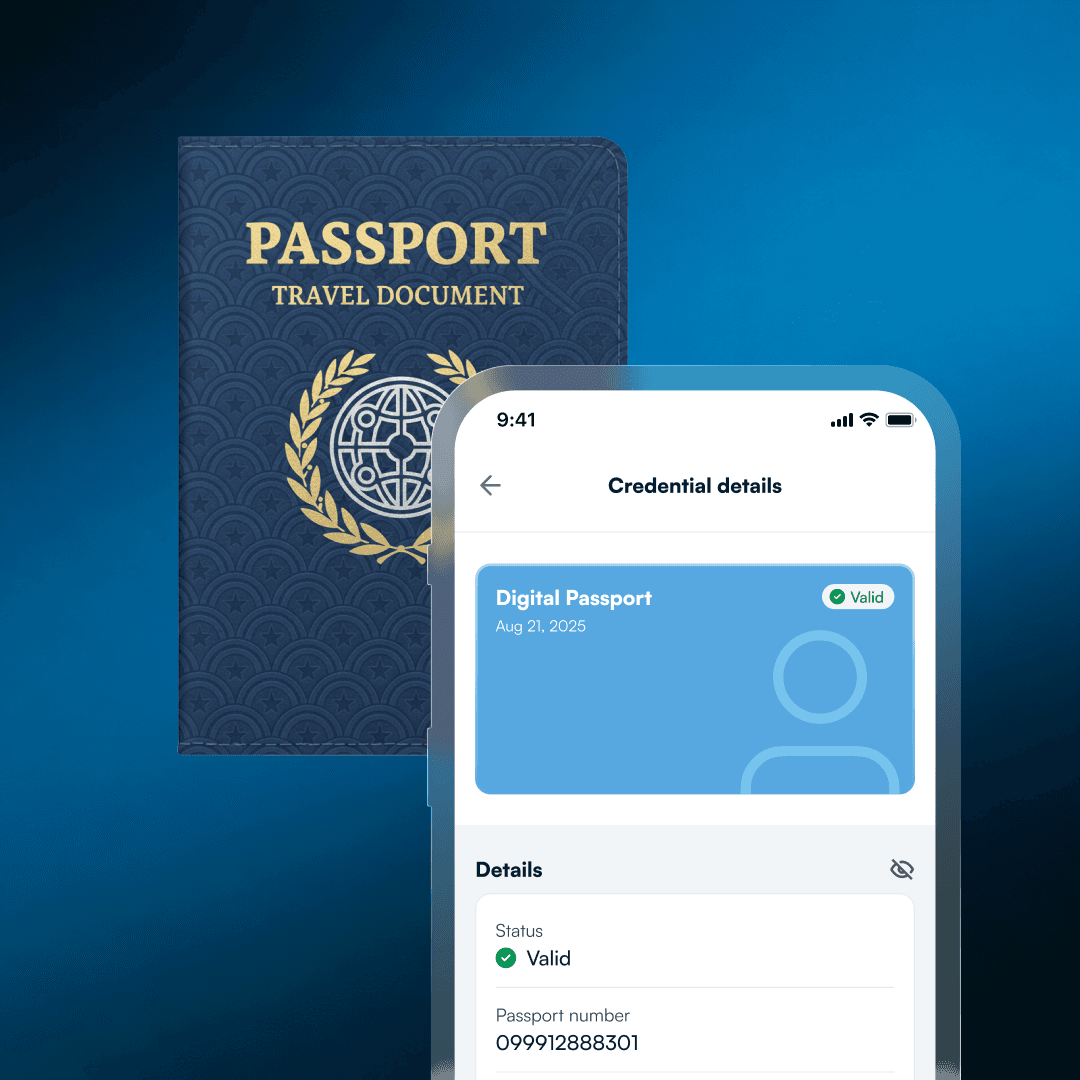
Interoperable national identity infrastructure
ICAO-aligned credential structure
T3 national ID credentials carry the identity claims defined by ICAO for machine-readable travel documents, mapped to the W3C VC data model for digital presentation at any compatible checkpoint.
GDPR-compliant by architecture
No PII is stored by T3 or transmitted to accepting checkpoints. Data subject rights — access, erasure, portability — are satisfied at the architecture level because there is no T3-held personal record to produce or delete.
Quantum-resistant signing
National ID credentials are signed using FIPS 204 post-quantum cryptography. Travel and identity records remain cryptographically valid against future threats, including harvest-now-decrypt-later attacks.
Integrate verifiable national ID into border and access systems
T3 Verify connects to national eID infrastructure and ePassport chipsets. Verify document authenticity and identity claims without storing the underlying biographic or biometric data.
Built for institutions that operate across regulated jurisdictions
We take security seriously and have implemented robust measures to protect your data.




National ID that travels without the data that shouldn't
Talk to our team about digital credential infrastructure for governments, airlines, and border agencies.