KYC credentials anchored to wallets at creation
A wallet verified through T3 carries a KYC/AML credential accepted across DeFi, NFT, and L2 platforms. One check. No re-runs. No fresh PII collected at every new protocol.
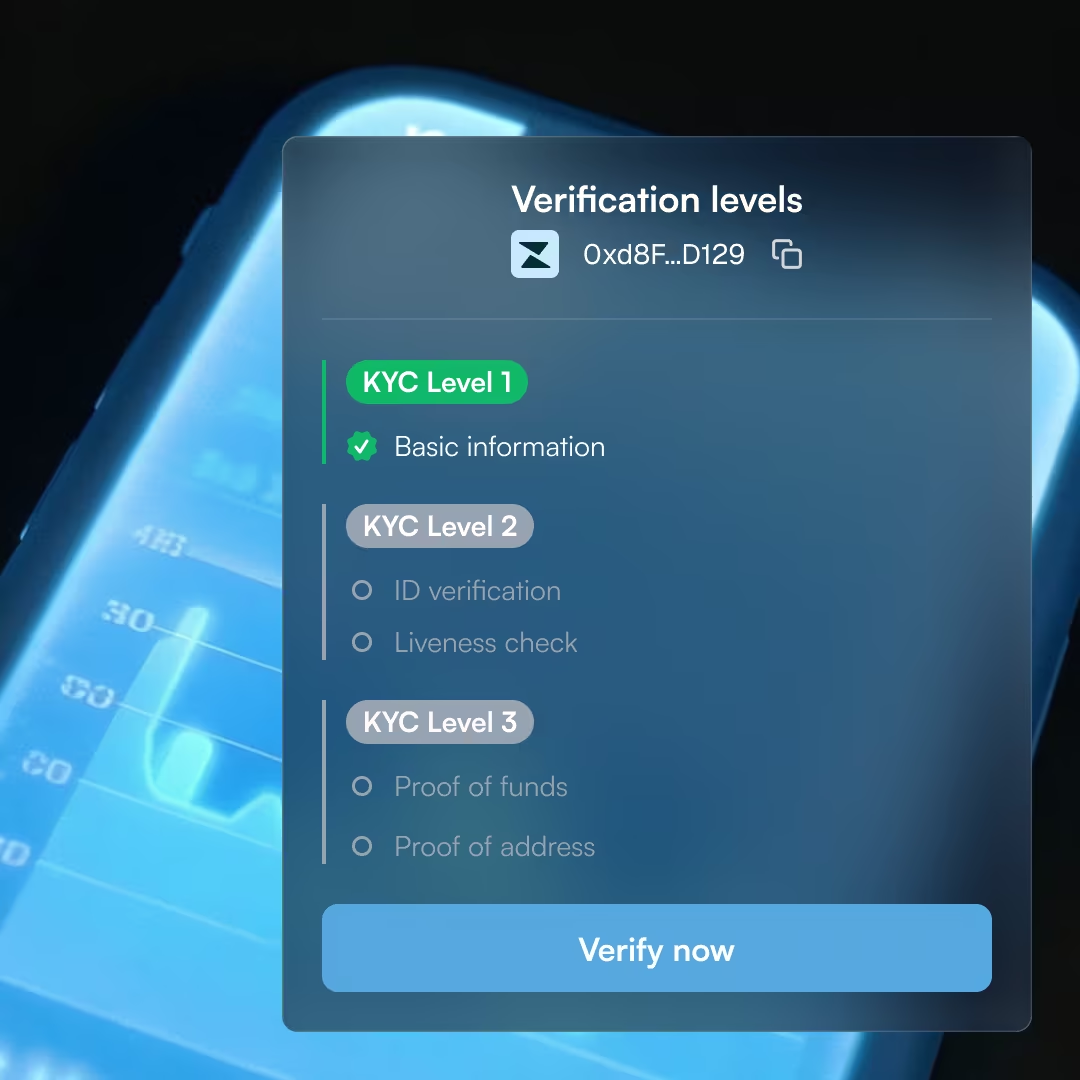
Every compliant protocol is re-verifying the same wallet
There is no portable form for the output of a KYC check. So every protocol requiring compliance starts over — same user, same documents, same cost — and collects another copy of PII it doesn't need to hold.
KYC is siloed by platform, not by person
A wallet with documented on-chain history and verified KYC at one protocol still has no recognized compliance status anywhere else. The credential doesn't travel from one protocol to the next; only the friction does.
Regulatory pressure is pushing DeFi toward KYC
Stablecoin frameworks, MiCA enforcement, FATF Travel Rule requirements, and exchange delisting pressure are driving more protocols toward identity requirements. The question is how to implement identity requirements without creating new data liabilities.
Collecting PII on-chain creates exposure that can't be undone
A protocol that stores KYC data has a permanent liability. On-chain data is immutable; GDPR requires deletion. The two are structurally incompatible without a credential layer that never stores the underlying data.
KYC issued once at the wallet, recognized everywhere on-chain
One KYC check, permanently anchored to the wallet
T3 Verify issues a KYC/AML credential at wallet creation. Every protocol that accepts T3 credentials inherits that check. The wallet carries its compliance posture wherever it goes with no re-verification or repeated document collection.
Accept verified wallets without collecting the underlying PII
Protocols verify a cryptographic proof rather than the underlying documents. They learn what they need: has this wallet been KYC'd, to what standard, and by whom? Nothing more is transmitted at the point of verification.
Travel Rule-ready from day one
KYC credentials anchored at wallet creation satisfy Travel Rule disclosure requirements at counterparty institutions. The credential travels with the wallet; the PII doesn't cross the transaction chain.
Pseudonymous compliance without deanonymization
Protocols can require verified wallets without forcing users to deanonymize across every platform they use. The credential proves compliance status; the underlying identity stays with the issuing institution.
The tools that power on-chain KYC
T3 Identity and T3 Verify work together: issuance at wallet creation, verification at every protocol.
KYC at wallet creation, available at every protocol
T3 Verify converts KYC verification into a W3C Verifiable Credential anchored to the wallet address. Protocols accept the credential with no PII transmitted at the point of verification and no new data collection event triggered.
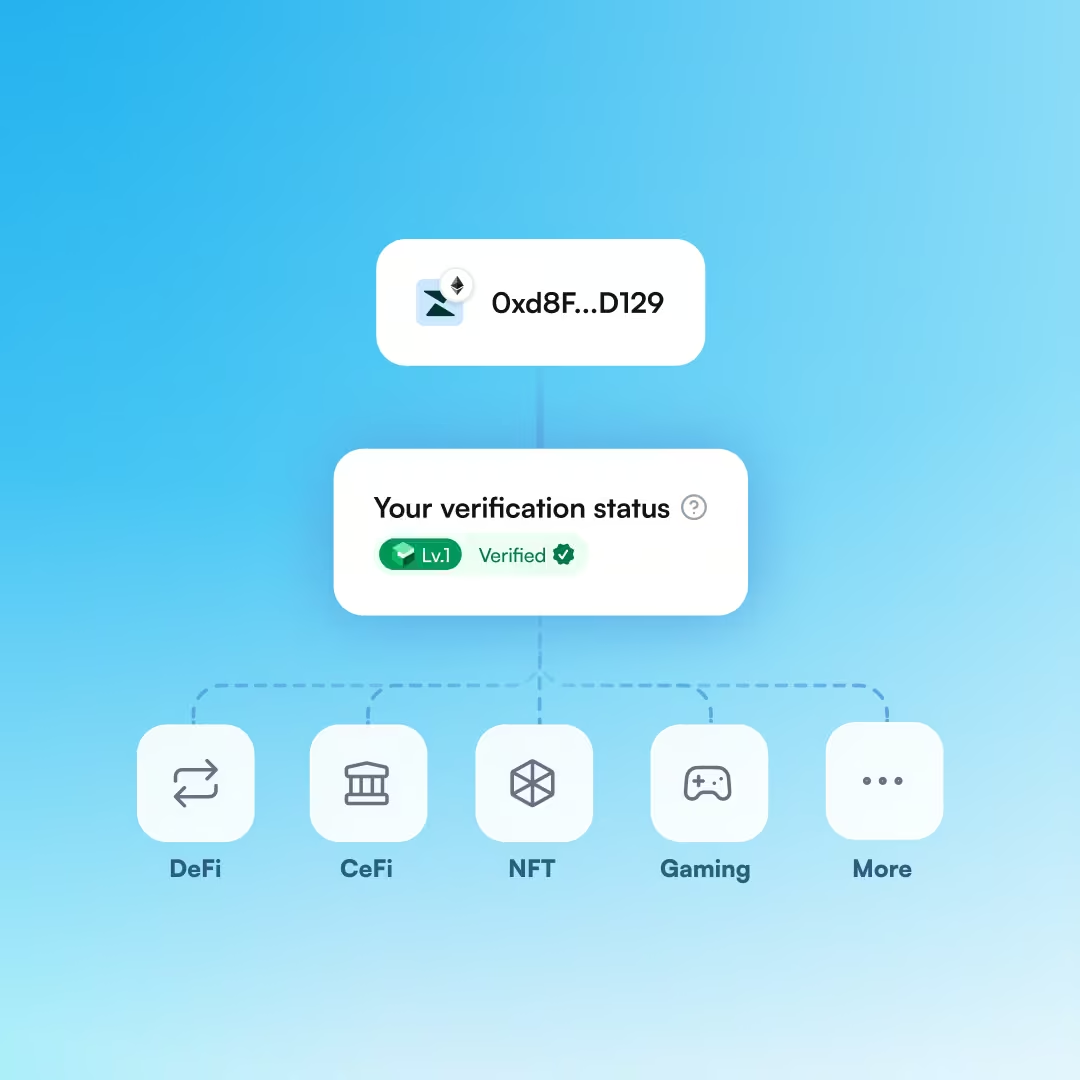
The infrastructure layer for compliant DeFi
W3C Verifiable Credentials
Wallet KYC credentials follow the W3C VC data model. Any protocol running OpenID for VCs or a compatible DID layer can verify them with no proprietary network membership or bilateral integration required.
GDPR-compliant by architecture
T3 holds no PII after credential issuance. There is no T3-held record to produce for regulators, secure against breaches, or manage for data residency requirements across jurisdictions.
Quantum-resistant signing
Wallet credentials are signed using FIPS 204 post-quantum cryptography. On-chain identity infrastructure remains secure against future cryptographic threats, including attacks targeting compliance records.
Integrate KYC credential verification into your DeFi protocol or L2
T3 Verify returns on-chain and off-chain credential status. Compatible with major wallet SDKs and smart contract verification patterns — no raw KYC data touches the chain.
Built for institutions that operate across regulated jurisdictions
We take security seriously and have implemented robust measures to protect your data.




KYC that travels with the wallet — not the platform
Talk to our team about verifiable identity infrastructure for your protocol, L2, or stablecoin.